
Verdict
Plus500 stands as a well-regulated CFD broker, offering a broad instrument selection via its user-friendly proprietary platform. While its research and educational provisions are somewhat basic, the broker's regulatory standing and straightforward trading experience are notable.
- Best for
- Retail traders seeking a highly regulated environment for CFD trading on a variety of assets, who prefer a simple, proprietary trading platform over third-party alternatives.
- Less suitable for
- Traders requiring MetaTrader 4/5 for advanced analysis or algorithmic strategies, or those who prioritise extensive research and educational content.
- Our recommendation
- Plus500 is a suitable option for retail traders prioritising strong regulatory oversight and a streamlined, proprietary trading platform for CFD instruments across a broad range of assets.
What holds up in testing
- Strong regulatory oversight from FCA, ASIC, and CySEC.
- User-friendly proprietary trading platform for web and mobile.
- Extensive range of CFD instruments, including forex, indices, commodities, and cryptocurrencies.
- Transparent spread-only fee structure on most products.
- Efficient and straightforward account opening process.
Where it falls short
- Absence of MetaTrader 4/5 platforms, limiting algorithmic trading options.
- Limited depth in research tools and educational resources.
- Inactivity fee can apply to dormant accounts.
- Customer support primarily via chat and email, lacking immediate phone access.
- Proprietary platform, while intuitive, offers less customisation than some alternatives.
How Plus500 scored, pillar by pillar
Weighted contribution shown in the right column.
| Pillar | Score | Weight | Contribution | Assessment | |
|---|---|---|---|---|---|
| Fees & Costs | 8.2 | 30% | 2.46 | Plus500 primarily operates on a spread-only model, which can be competitive, though overnight funding charges and an inactivity fee are applied. | |
| Trading Platforms | 7.8 | 15% | 1.17 | The broker provides a proprietary web and mobile platform, which is intuitive for executing trades but lacks the advanced customisation and third-party integration of platforms such as MetaTrader. | |
| Trust & Safety | 9.5 | 20% | 1.90 | Plus500 benefits from robust regulation by multiple Tier-1 authorities, including the FCA, CySEC, and ASIC, providing a high level of client protection and operational transparency. | |
| Deposits & Withdrawals | 8.3 | 15% | 1.25 | A standard array of deposit and withdrawal methods are supported, with processes typically handled efficiently and without commission for most common transactions. | |
| Customer Support | 7.5 | 3% | 0.22 | Customer support is advertised as 24/7, accessible via live chat and email, though phone support is not a primary channel. | |
| Research & Education | 6.5 | 5% | 0.33 | Research tools and educational content are somewhat limited, focusing on basic market information rather than in-depth analytical resources or comprehensive trading courses. | |
| Product Range | 8.8 | 10% | 0.88 | Plus500 offers an extensive selection of CFD instruments covering forex, indices, commodities, shares, cryptocurrencies, and specified US futures, appealing to diverse trading interests. | |
| Account Opening | 8.2 | 2% | 0.16 | The account opening process is entirely digital and generally efficient, requiring standard identity verification documents for compliance. | |
| Weighted total | 8.4 | 8.37 | Out of 10. Weights are published on the Trust Score page. | ||
Trust Score working
| Component | Raw | Weight | Contribution | Basis |
|---|---|---|---|---|
| Safety pillar | 95 | 55% | 52.3 | Observed on our funded account: segregation, protections, payout behaviour. |
| Regulatory reach | 71 | 25% | 17.8 | 2 tier-1, 3 tier-2, 0 tier-3 licences verified. |
| Longevity | 61 | 20% | 12.2 | 18 years of operation since 2008. |
| Trust Score | 82 | Out of 100. Formula in full → | ||
Suitability for Retail Traders
Plus500 caters primarily to retail traders interested in Contracts for Difference (CFDs) across a wide array of financial instruments. Its core appeal lies in its regulatory robustness, holding licenses with several prominent authorities including the UK's Financial Conduct Authority (FCA), the Cyprus Securities and Exchange Commission (CySEC), and the Australian Securities and Investments Commission (ASIC). This multi-jurisdictional regulation provides a significant degree of assurance regarding client asset protection and operational integrity.
The proprietary trading platform is designed for ease of use, making it accessible for those new to CFD trading, while still offering essential charting and order execution functionalities. However, its simplicity means that advanced traders accustomed to the analytical depth or customisation options of platforms like MetaTrader may find it limiting. The broker’s offering is particularly suited for individuals focused on short-to-medium term speculative trading across diverse markets without requiring extensive external analytical tools.
Fee Structure and Spreads in Practice
Plus500 operates predominantly on a spread-only model, meaning no direct commission is charged on trades; instead, the broker's remuneration is integrated into the bid-ask spread. These spreads are variable and can fluctuate based on market conditions and liquidity. For example, major forex pairs typically exhibit tighter spreads, while less liquid instruments or those traded during off-peak hours may incur wider spreads. Traders should be mindful of overnight funding charges (often termed 'overnight interest'), which are applied for positions held open beyond a specific time, reflecting the cost of financing leveraged trades.
An inactivity fee is also levied on accounts that remain dormant for a period, typically three months, which is a common practice among CFD brokers to manage operational costs associated with inactive client accounts. While the spread-only model can appear straightforward, the combination of variable spreads, overnight fees, and potential inactivity charges necessitates a thorough understanding for effective cost management over time.
Proprietary Trading Platform Analysis
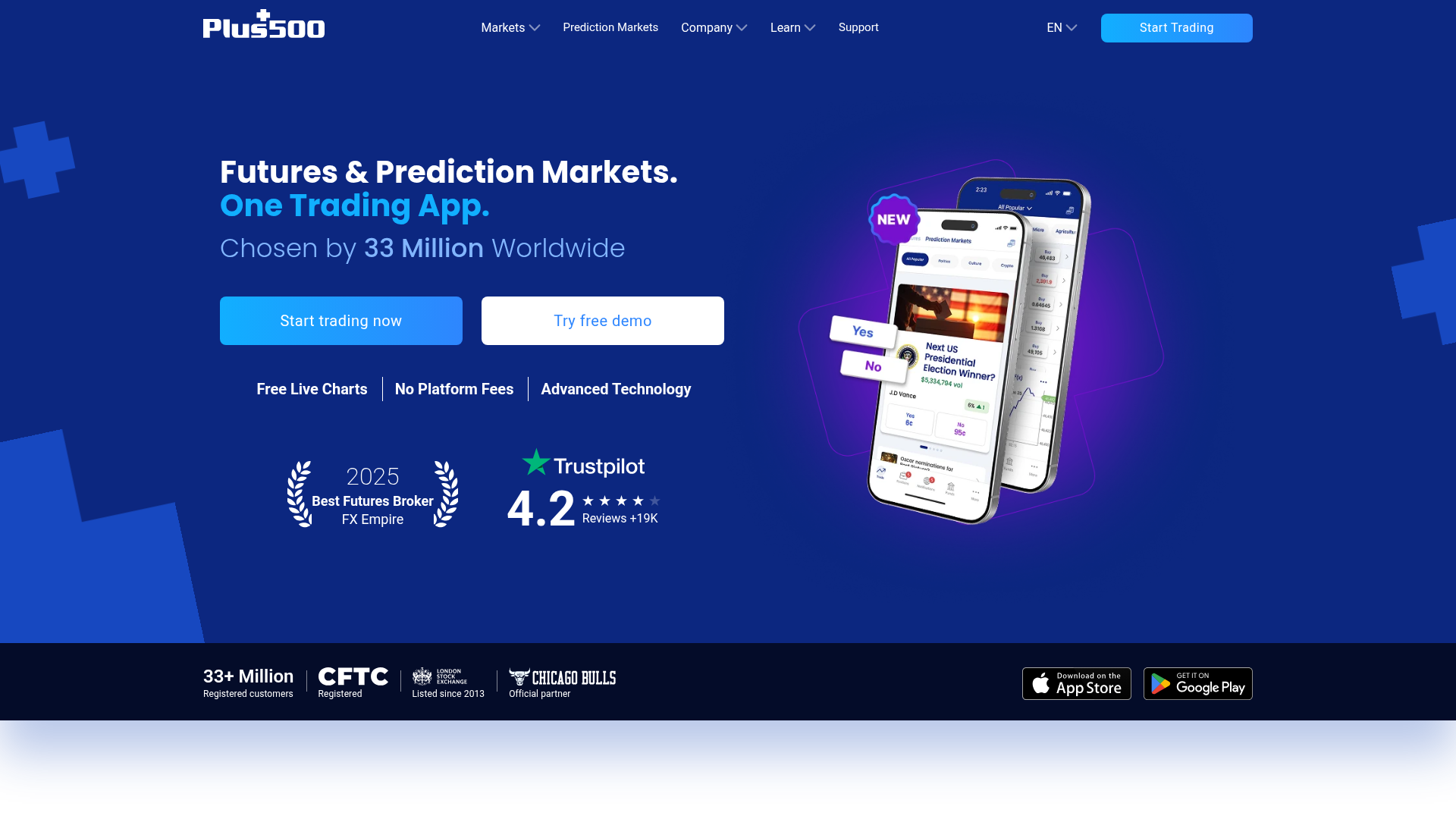
Plus500's trading operations are conducted exclusively through its proprietary platform, available as a web-based interface and dedicated mobile applications for iOS and Android devices. This platform is recognised for its clean design and user-friendly navigation, allowing for direct access to the broker's extensive range of CFD products. The interface facilitates straightforward order placement, including market, limit, and stop orders, alongside features like guaranteed stop-loss orders for enhanced risk management.
Charting capabilities are functional, offering various chart types and a selection of technical indicators for basic analysis. However, the platform does not support the integration of expert advisors or custom indicators, nor does it provide access to advanced scripting languages found in MetaTrader. This design choice simplifies the trading experience but inherently limits the scope for automated trading strategies or highly personalised analytical setups. The focus remains on accessible execution for a broad retail audience.
Regulatory Framework and Client Safety
Plus500's regulatory profile is a significant factor in its credibility. The company operates under the supervision of several highly regarded financial authorities: the Financial Conduct Authority (FCA) in the UK, the Cyprus Securities and Exchange Commission (CySEC), the Australian Securities and Investments Commission (ASIC), the Financial Markets Authority (FMA) in New Zealand, and the Financial Sector Conduct Authority (FSCA) in South Africa. This robust regulatory architecture mandates stringent operational standards, including capital adequacy requirements, regular financial reporting, and the segregation of client funds from the company's operational capital.
Client funds are held in separate bank accounts, providing a layer of protection against the unlikely event of broker insolvency. Furthermore, clients under certain jurisdictions, such as the UK, may benefit from investor compensation schemes (e.g., FSCS), which offer additional security for eligible claims. The breadth of regulatory oversight instils confidence in Plus500's commitment to maintaining a secure and compliant trading environment for its global clientele.
Deposits, Withdrawals, and Account Management
Managing funds with Plus500 is generally efficient, with the broker supporting a range of common deposit and withdrawal methods. These typically include bank transfers, credit/debit cards (Visa, MasterCard), and various electronic payment systems such as PayPal and Skrill, depending on the client's geographical location. Deposits are usually processed quickly, often instantaneously for electronic methods, allowing traders prompt access to funds for market participation. Plus500 does not charge deposit fees, though third-party payment providers may apply their own charges.
Withdrawal requests are typically processed within a few business days, adhering to standard anti-money laundering (AML) protocols that require funds to be returned to the original source of deposit. While Plus500 generally offers a limited number of free withdrawals per month before potential fees apply, these terms are clearly outlined. The overall process for fund transfers is designed to be straightforward, aligning with the platform's emphasis on user accessibility.
Product Range and Market Access
Plus500 distinguishes itself with a comprehensive product offering, providing access to Contracts for Difference (CFDs) across an expansive array of asset classes. This includes a substantial selection of forex pairs, major global indices, a variety of commodities (such as oil, gold, and silver), and CFDs on individual shares from international markets. Furthermore, the broker facilitates trading on a growing number of cryptocurrency CFDs, allowing exposure to digital assets without direct ownership.
The platform also specifically advertises the ability to 'Trade US Futures on Bitcoin, S&P 500, Oil, and more.' This indicates an extension of their CFD offering to include instruments whose underlying assets are US futures contracts, providing diversified opportunities for speculative trading. The breadth of instruments available ensures that traders can construct varied portfolios and react to developments across multiple market segments from a single account.
Questions readers ask about Plus500
Is Plus500 a regulated broker?
Yes, Plus500 is regulated by several reputable financial authorities, including the FCA (UK), CySEC (Cyprus), ASIC (Australia), FMA (New Zealand), and FSCA (South Africa).
What trading platforms does Plus500 offer?
Plus500 exclusively offers its own proprietary trading platform, which is available as a web-based application and as mobile apps for iOS and Android devices. It does not support MetaTrader 4 or 5.
What types of instruments can I trade with Plus500?
Plus500 offers Contracts for Difference (CFDs) on a wide range of assets, including forex, stock indices, commodities, shares, cryptocurrencies, and specified US futures contracts.
Does Plus500 charge an inactivity fee?
Yes, Plus500 may apply an inactivity fee to accounts that remain dormant for a specified period, typically three months, if no trading activity occurs.